The unknown effects of multilingualism

Introduction

This page is the second part of a study of articles.

Beyond Bilingualism: multilingual experience correlates with caudate volume By Alexis Hervais-Adelman, Natalia Egorova, Narly Golestani

2nd language acquisition and bilingualism at an early age and the impact on early cognitive development by ELLEN BIALYSTOK

Cognitive advantages and disadvantages in early and late bilinguals by Sabra D. Pelham and Lise Abrams

The advantages of multilingualism

In the past, multilingualism was thought to confuse children and blocked a normal cognitive development.

Although some parts of this may be true as in the previous part, the notion of multlingualism being “bad” for children doesn’t exist anymore.

Children speaking more than one language were actually found to score higher on several intelligence tests and do better in school.

Apart from school, being able to speak more than one language can break limitations on communication. It can help socialise with more people, adapt to more environments and enjoy them more.

In addition to increased social skills, bilingual children can have advantages in their education.

Bilingual children have been found to have better metalinguistic awareness

Metalinguistic awareness

the understanding of the structure of a language

And an advantage in the acquisition of literary skills.

Although this was only in bilingual children where the two languages had common writing systems such as the alphabet, Kanjis…

Those with different writing systems however, didn’t have any advantage or disadvantage to monolinguals in this aspect.

Non language related advantages

Surprisingly, the advantages of multilinguals don’t stop there.

Multilinguals have been found to be better in several non verbal tasks of executive functions.

One is the Simon or Stroop task.

This task requires the participants to ignore irrelevant but important parts of information and select the relevant ones to select a correct response.

Another is called the ANT.

What is measured in this task is similar to what multilinguals do nearly all the time.

Blocking the other languages ( distractors ) when using one.

ANT

attentional network task

Measures the ability to suppress interference from distractors

When using one language, the same words in the other languages have been observed to be activated in the brains of multilinguals.

This creates a “language conflict” but also emphasises the need of the ability to block distractors.

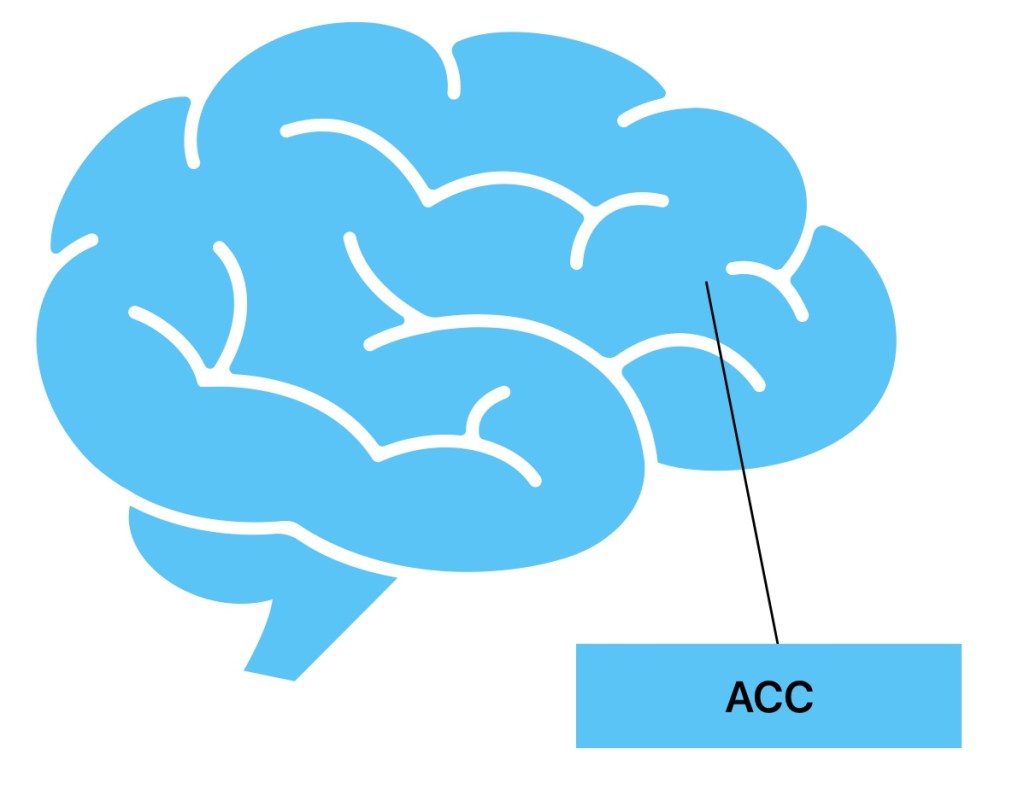
A finding that strengthened the similarity of the language conflict and ANT was that some brain regions activated during a language conflict were the same as when inhibiting distractors, task switching and response selection.

This also corresponds to the fact that bilinguals have smaller conflict effects

Conflict effect

The reaction time to an incongruent ( unusual ) stimulus – the reaction time to a congruent stimulus

And that bilingual children perform better at control of attention, switching mental sets and theory of mind.

Part 1 :

The problems of multilinguals

Introduction

As a result of technology and its progress, transport has become easier and faster. This means more and more people live away from where they were born. In some cases this means, in a different country or continent.

To adapt to the new environment, language becomes very important. Although challenging many people are now bilingual or multilingual.

This page is the first part of a study of articles.

Beyond Bilingualism: multilingual experience correlates with caudate volume By Alexis Hervais-Adelman, Natalia Egorova, Narly Golestani

2nd language acquisition and bilingualism at an early age and the impact on early cognitive development by ELLEN BIALYSTOK

Cognitive advantages and disadvantages in early and late bilinguals by Sabra D. Pelham and Lise Abrams

Context

Multilingual’s may be able to speak several languages. However, this means their brains have to :

  • Select the proper set of sounds, words and meanings
  • Inhibit the others sets

This additional processing required means they are usually slower in generating words.

This was measured using picture naming tasks and verbal fluency tasks.

Verbal fluency task

A test that requires the participants to say as many words that belong to a given category in 60 seconds.

This deficit in generating words can also lead to TOT phenomenons which have been found to happen more in bilinguals than monolinguals.

TOT phenomenon

Tip of the tongue phenomenon

When a known word/name doesn’t come out for a short time

In young children

These problems are faced on a day to day basis.

Other issues with multilingualism also exist in a developmental way.

Most obviously, when children aren’t fluent or very proficient in a language, learning or socialising with it is going to be a difficult task.

Another is vocabulary.

Bilinguals generally have a slightly smaller vocabulary in each language compared to a monolingual.

All of these “issues” are found in lab settings. However, there are individual differences and they aren’t always felt.

Next Part :

Why so many different results ?

Introduction

This page is the fourth part of a study of articles.

Blood type and personality by Mary Rogers and A. Ian Glendon

A Pilot Study Using AI for Psychology: ABO Blood Type and Personality Traits by Masayuki Kanazawa

Is it true or not ?

As many experiments have been done and many papers have been published, the design and methods of these are definitively important.

However, it is possible that another factor greatly influences this field and the broader field of personality psychology.

That problem is the researchers themselves.

As in the two articles presented, the thought of the researcher fits the final result.

in the first article, the writer seemed to be pretty suspicious of the relation and found results not supporting the relation.

In the second article, the author seemed to believe in it and found supporting results. He also had done other studies with supporting evidence.

This isn’t necessarily a case of untruthful manipulations such as p-hacking, although it may.

Simply, a researcher who believes in something will look for evidence for it. This makes them more likely to find evidence or data that matches their beliefs.

It would be possible to find groups of people chosen randomly to have significant differences in personality or anything, if it is searched well.

Part 1 : The root of the Blood type – personality relation

Part 2 : Evidence supporting the blood type-personality relation. Are they legit ?

Part 3 :

The five factor model and blood type.

Introduction

This page is the third part of a study of articles.

Blood type and personality by Mary Rogers and A. Ian Glendon

A Pilot Study Using AI for Psychology: ABO Blood Type and Personality Traits by Masayuki Kanazawa


The five factor model

The five factor model is the most widely accepted way to measure personality.

Five factor model

Divides personality into five aspects :
extraversion
neuroticism
openness to experience ( or intellect )
agreeableness
conscientiousness

Each aspect is dependent on genetics to a certain point. Genetics determine :

  • 40% of neuroticism
  • 53% of extraversion
  • 61% of intellect
  • 41% of agreeableness
  • 44% of conscientiousness

They are also correlated between each other meaning it is possible to predict, to a certain degree, the score of one aspect from another.

The first article was only the second ever published article to look at blood type, gender and the five factor model.

Optimism was also included using the revised life orientation test ( LOT-R), making it the first to include optimism in addition to the 3 measures above.

Results

The experiment found correlations between the different variables ( the five factors and optimism ).

It also found some evidence for relation of neuroticism being slightly higher in women than men and an effect of gender on extraersion.

However, no relation was found between blood types and any aspect of personality.

The second article : AI supports the relation ?

On the other hand, the second article was able to find a relation.

They used AI and taught it to determine the blood type of people using their personality.

The author of this article says that the machine was able to find the blood type of people at a rate higher than chance.

This was also in the case of looking at people who didn’t believe or know about the blood type and personality relation.

However, again, this study wasn’t perfect. It didn’t have the same number of people in each blood type.

Instead it had a similar proportion to that of the Japanese population as it was done with Japanese participants.

Part 1 : The root of the Blood type – personality relation

Part 2 : Evidence supporting the blood type-personality relation. Are they legit ?

Next Part : title